Your First 48 Hours After Finding Mold
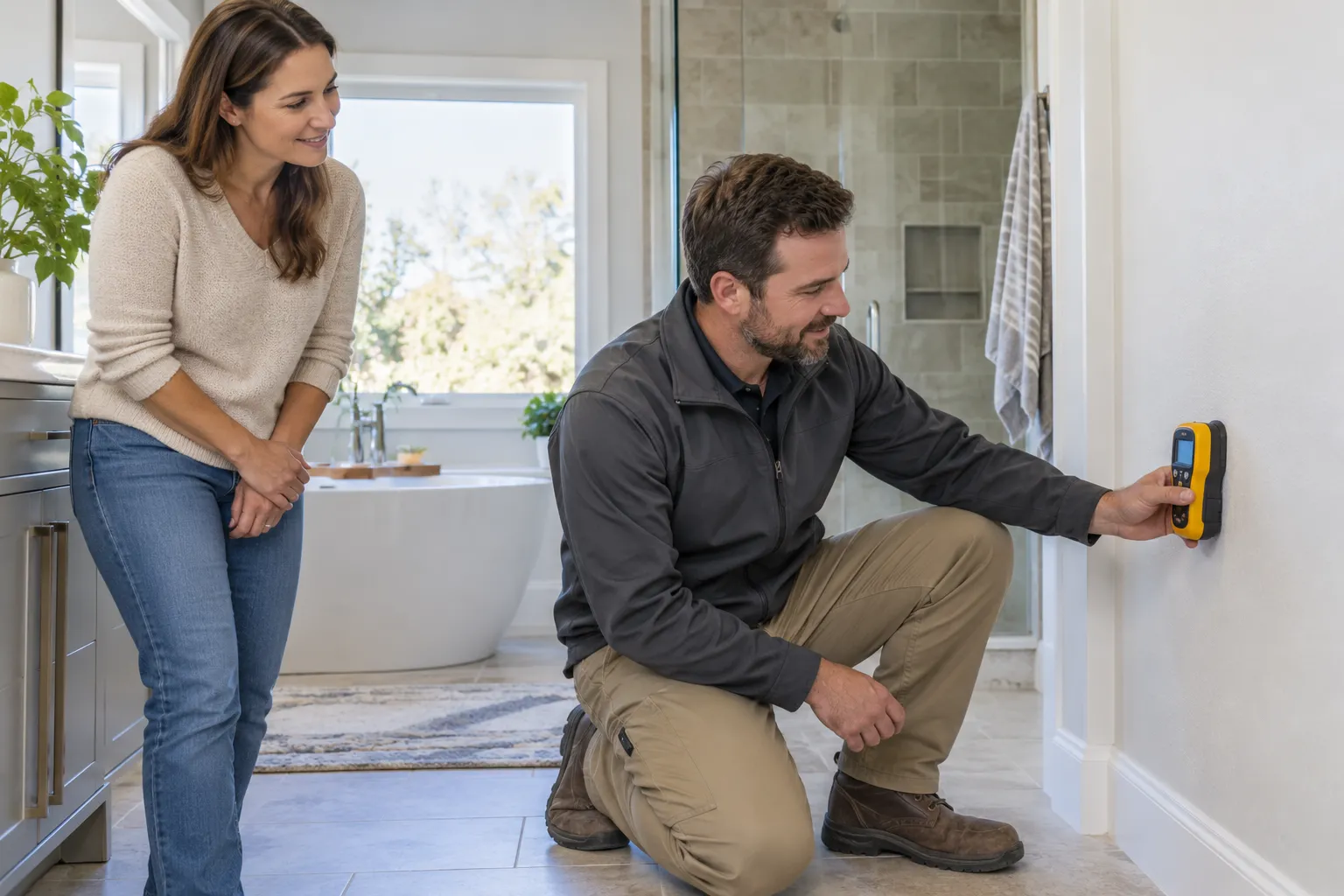
You found mold, or a test says it is there. Take a breath. A few calm steps in the first 48 hours can limit the damage and make later work simpler. This checklist is general. It cannot replace someone looking at your home in Portland.
The first few hours
Step 1: Leave it alone
Do not scrub, sand, scrape or dry-wipe the mold. Do not point a fan at it. Disturbing it can send spores into other rooms. Spraying a cleaner on it and walking away rarely fixes the damp material underneath.
Step 2: Protect people
Keep children, older adults, pets and anyone with asthma, allergies or a weak immune system out of the area. If someone feels unwell, contact a doctor. Do not wait for a test result to do that.
Step 3: Find the water
Mold needs moisture. Look for a leaking pipe, a roof drip, a wet window frame, a clogged gutter or damp soil against the foundation. If a fixture is leaking, shut off its water if you can do so safely. Catch drips in a bucket. The repair itself belongs to a plumber, roofer or drainage contractor.
Step 4: Document everything
Take clear photos of every affected spot. Hold a coin or tape measure beside each one for scale. Write down where you found it, when you noticed it and any recent leaks or storms. These notes help providers write accurate estimates and help with any insurance conversation.
The rest of day one
Step 5: Close off the area
Shut the doors to the room. If you have forced-air heating, avoid running it in that space. Turn off fans that move air through the area. The goal is to keep that room's air from drifting through the rest of the house.
Step 6: Start drying safely
Dry indoor air helps, even though the wet season outside is damp. Run a dehumidifier in the closed room if you have one, and empty it often. Move furniture away from wet walls. Lift wet rugs only if you can do it without shaking loose mold. Wet drywall, carpet and insulation often need a professional's judgment.
Step 7: Read your insurance policy
Policies differ. Some address certain sudden water damage and not others. Read yours, then ask your insurer what is covered and what they need from you. Do not assume anything. Keep every receipt.
Day two
Step 8: Decide whether to test
Testing can show what kind of growth is present and how widespread it is. It is not always needed. Visible mold in one small spot may only need cleanup. Consider asking for an inspection if:
- You smell damp but cannot see the source
- The affected area is larger than a small patch
- Mold came back after cleaning
- Someone in the home is having symptoms
Step 9: Request estimates
Use the request form to describe the area. Independent local providers set their own scope and prices, so compare more than one.
Step 10: Ask good questions
- What will be removed, and what will be cleaned?
- How will the work area be sealed off?
- How will moisture be checked before and after?
- Is the water repair included, or priced separately?
- What will I receive in writing when the job is done?
If it is a crawl space or attic
Do not crawl into a wet space with visible growth just to look around. Photograph what you can see from the entry and note any smell or standing water. Disturbed insulation and damp soil can be unpleasant and hard to judge. Leave the close inspection to someone with the right protective gear.
What to avoid
- Painting or caulking over mold
- Running a household fan across a growth to dry it out
- Carrying moldy materials through the house uncovered
- Waiting and hoping it fades on its own
- Skipping the water repair
Why these steps matter
Careful early choices protect the home, its value and its resale. Photos, notes and a clear written scope give you a record to show future buyers. They also keep you from paying twice for the same problem. Slow, steady steps are enough. You do not need to fix everything in one afternoon.
Keep reading
Your First 48 Hours After Finding Mold: questions
Can I clean the mold myself in the first 48 hours?
For a very small surface spot on a hard material, some homeowners choose to clean it carefully. For anything larger, hidden, or on porous materials like drywall and insulation, it is wiser to stop and get advice. Scrubbing can spread spores, and cleaning does not solve the moisture behind it.
Should I open windows to air out the room?
Not always. During a long wet season, outdoor air is often damp, so opening windows may add moisture. A dehumidifier in a closed room is usually a steadier choice. Avoid fans that push air from the affected area into the rest of the house.
Do I need to leave my home while this is sorted out?
That depends on how much mold there is, where it is and who lives in the home. Anyone with breathing trouble or a weak immune system should talk with a doctor. A provider can tell you more after seeing the space and explaining how the area will be sealed off.
Reach a local provider
Tell us what you are seeing at home. Request a callback to check provider availability, or send a request and we will point you to a local provider.
No obligation